

Explore the latest ImmPulse Weekly for key Canadian immigration insights—or browse past editions to catch up.
Canada is asking the Federal Court to dismiss (in a single, consolidated proceeding) roughly 430 mandamus applications brought by Chinese study/work/visitor permit applicants alleging unreasonable processing delays, arguing the cases show “irregularities” consistent with unauthorized “ghost agent” involvement, including near-identical formatting/phrasing and overlapping addresses, phone numbers, and emails despite claims of self-representation; notably, the government is not challenging whether the underlying delays were unreasonable on the merits, but instead says the filings may be misleading and contrary to who is permitted to act before the Court, prompting debate among immigration lawyers about the unprecedented scale of the consolidation request and the risk that genuine delay claims could be dismissed due to representation fraud, while others argue the broader problem is that unauthorized agents clog systems and applicants become the ones who pay the price; the article also situates this in the surge of Federal Court immigration litigation and notes IRCC’s stated intention to introduce tougher measures in 2026, including proposed monetary penalties (up to $1.5 million) and public naming of unauthorized practitioners and those involved in misrepresentation.
IRCC published an updated statistical snapshot explaining that new student and worker arrivals are declining, framing this as part of a stated objective to return immigration to “sustainable levels” and reduce the temporary population to under 5%, and highlighting that arrivals between January and November 2025 were down significantly compared to the same period in 2024 (including a reported 52% fewer combined student/worker arrivals). The page outlines policy measures affecting these trends, such as caps and integrity measures in the International Student Program, adjustments to Temporary Foreign Worker Program low-wage hiring rules, tighter Post-Graduation Work Permit eligibility, and tightened spousal work permit eligibility, and provides point-in-time figures as of November 30, 2025 for permit holders (including people holding only study permits, only work permits, and those holding both), while also noting that from January to November 2025 over 177,000 former temporary residents became permanent residents (about 48% of new permanent residents during that time).
(Source)
The Government of Yukon has opened the 2026 Yukon Nominee Program (YNP) Expression of Interest intake, with submissions accepted until January 30, 2026 at 4:30 pm Yukon Standard Time. Employers must submit information about the foreign national they are sponsoring through an online form, with points awarded based on program priorities; employers who submitted an Expression of Interest in 2025 and were not invited also receive points, and the highest-scoring employers in each intake are invited to apply. Key 2026 priorities include regulated health care professionals, rural Yukon employers, and foreign nationals who have lived and worked in Yukon for at least one year, are Yukon University graduates, are Francophone/French-speaking, or received a Temporary Measure Letter of Support in 2024 or 2025; recipients of those Temporary Measure Letters will be contacted directly and do not need to submit a new Expression of Interest.
(Source)
Saskatchewan’s Ministry of Immigration and Career Training announced charges against two employers for alleged offences under The Foreign Worker Recruitment and Immigration Services Act, 2013 and The Immigration Services Act, including allegations such as charging prohibited fees for employment, misrepresenting employment opportunities (including position, duties, wages/benefits, and terms), threatening deportation without lawful cause, and exploiting a foreign national’s trust or fear/lack of knowledge. The release identifies the accused as Vikram Singh (alleged offences at Taste of Battlefords in North Battleford between April–June 2024) and Harinder Sachdeva (alleged offences at Rick’s Place and Taste of Battlefords in Humboldt and North Battleford between April–July 2024), and notes the Program Compliance Branch can be contacted confidentially to ask questions or file complaints.
(Source)
British Columbia has increased the BC Provincial Nominee Program (BC PNP) Skills Immigration application fee from $1,475 to $1,750, effective January 22, 2026, as part of the program’s broader role in supporting pathways for skilled workers and eligible entrepreneurs seeking permanent residence and contributing to regional economic growth in B.C. The update also notes scheduled system maintenance on January 27 and 28.
(Source)
IRCC has removed the “Express Entry: Overview” page from its operational instructions, with the update posted on January 23, 2026 indicating the Express Entry overview instructions have been deleted from the department’s program delivery guidance published for stakeholders’ reference.
IRCC has updated its internal operational instructions relating to protected persons applying for permanent residence, specifically the guidance on “Identity Documents,” with the program delivery update posted on January 20, 2026 directing stakeholders to the revised instructions.
(Source)
IRCC has updated the “Submission of open work permit applications for various International Mobility Program (IMP) categories” section, reorganizing content by grouping categories under clearer subtitles, including applicants whose work permits are not tied to a permanent residence pathway, certain spouses/common-law partners eligible under free trade agreements, family members of temporary foreign workers, those on a pathway to permanent residence but who have not yet submitted a PR application, those who have submitted a PR application, family members transitioning to permanent residence or who are PR applicants, and spouses of students.
(Source)
IRCC announced that Canada exceeded its 2025 Francophone immigration target for the fourth consecutive year, reaching about 8.9% of admissions of French-speaking permanent residents outside Quebec (against a stated 2025 target of 8.5%), based on preliminary year-end data. The release also states that starting in 2026 the federal government will reserve 5,000 federal selection spaces, additional to Provincial Nominee Program allocations, to allow provinces and territories to designate French-speaking immigrants, positioning this alongside other measures (including Express Entry’s French-language category and Francophone Mobility) as part of the stated path toward a 12% target for French-speaking permanent residents outside Quebec by 2029, with planned targets of 9% (2026), 9.5% (2027), and 10.5% (2028) under the 2026–2028 Immigration Levels Plan.
(Source)
Global Affairs Canada announced the launch of a Mutual Recognition Agreement for Professional Qualifications of Architects under CETA, intended to make it easier to recognize Canadian and European architects’ qualifications across jurisdictions and support collaboration in architecture and related sectors such as engineering and construction. The release describes this as the first mutual recognition agreement for professional services under a Canadian free trade agreement and links it to Canada’s trade diversification goals, citing the scale of Europe’s building construction market and providing broader context on Canada–EU trade under CETA, including reported growth in bilateral trade since pre-CETA levels.
(Source)
Issue: Whether it was reasonable to refuse an LMIA-based, employer-specific work permit by assessing a “hairstylist apprentice” using the requirements of a fully qualified hairstylist.
Facts: The Applicant applied from outside Canada for an employer-specific work permit supported by a positive LMIA, with the occupation listed as “Hairstylist Apprentice” under NOC 63210. The officer refused, finding the Applicant had not shown the education/experience requirements identified for NOC 63210, relying heavily on the absence of education documents and only one employment letter.
Court Findings: The Court found the officer unreasonably conflated an “apprentice” with a fully qualified worker. The Court emphasized that the NOC convention groups apprentices with the occupation for classification reasons and is not intended to imply equivalence; assessing apprentices as if already fully qualified would defeat the purpose of apprenticeship. The Court also found the officer unreasonably discounted evidence of ongoing employment/experience.
Outcome: Judicial review allowed; refusal set aside and remitted for redetermination.
Why This Case is Important: It is a practical reminder that, in LMIA work permit cases, officers must assess whether the applicant can perform the offered job in context—including where the role is explicitly an apprenticeship/training role—and should not treat NOC “employment requirements” as a rigid checklist that collapses apprentice roles into fully licensed tradespeople.
Issue: Whether refusal of Start-up Business Class permanent residence applications was reasonable, including the finding that the “essential” applicant’s primary purpose was to acquire immigration status (IRPR, para 89(b)) and the consequential refusals of the associated applicants.
Facts: Four Start-Up Visa permanent residence applications tied to the same venture (PicIt4Me) were consolidated. Mr. Bdaiwi was identified as the essential applicant. IRCC issued procedural fairness letters requesting corporate financial materials (including financial statements and T2 notices of assessment) and raising concerns about business viability/projections and seriousness (including the essential applicant not applying for a work permit despite “urgent reasons” referenced in the commitment documentation). The officer refused the essential applicant’s application under para 89(b) and refused the other applicants as a consequence of the essential applicant’s refusal.
Court Findings: The Court held the decision was reasonable. It found the officer’s concerns were put squarely to the applicants through fairness letters and the officer meaningfully engaged with the responses. The applicants’ arguments largely sought reweighing of evidence (e.g., competitor comparisons and financial projections). The Court accepted it was open to the officer to draw negative inferences from missing/insufficient corporate financial documentation and from the essential applicant’s failure to seek a work permit where the record suggested management in Canada was presented as important.
Outcome: Judicial review dismissed.
Why This Case is Important: It reinforces the evidentiary and credibility burden in Start-Up Visa cases—especially where IRCC raises para 89(b) “primary purpose” concerns. It also highlights the cascading effect of an “essential” applicant’s refusal on co-applicants under the program structure.
Issue: Whether it was reasonable to refuse a reconsideration request after a TRV refusal where the Applicant alleged pregnancy-related circumstances (including a miscarriage) and asserted procedural unfairness.
Facts: The Applicant sought reconsideration of a TRV refusal, stating she had been pregnant and later miscarried, and arguing she could not comply with certain IRCC requests while abroad. The officer refused to reconsider, noting the Applicant had previously asserted she was not pregnant, did not request an extension while the file was active, and did not provide adequate medical evidence of inability to respond in time.
Court Findings: The Court found no breach of procedural fairness and upheld the reconsideration refusal as reasonable. The Court accepted the officer’s view that there was no persuasive basis to revisit the original decision on the record provided, including the timing and content of the Applicant’s own prior statements and the insufficiency of supporting evidence.
Outcome: Judicial review dismissed.
Why This Case is Important: It underscores that reconsideration is not an appeal on the merits and that applicants must put forward timely, coherent evidence (and seek extensions where needed). It also illustrates the Court’s deference where officers explain why new information does not justify reopening a concluded decision.
Issue: Whether mandamus should issue to compel a decision on a citizenship application (grant of citizenship) in circumstances involving document deficiencies and requests for additional information.
Facts: The Applicant applied for a grant of citizenship and later commenced mandamus, alleging delay. IRCC’s record showed repeated requests for missing/unclear documentation (including around an adoption process and requested translations), and that parts of the delay were attributable to the Applicant’s failure to provide materials in the manner requested.
Court Findings: The Court dismissed mandamus, finding the Applicant had not met the preconditions because the file was not “complete” in the relevant sense and the Applicant contributed to the delay by not providing the documents requested (or by providing them late/incorrectly). The Court accepted that IRCC’s requests were material to assessing the application.
Outcome: Judicial review (mandamus) dismissed.
Why This Case is Important: It provides a clear caution for mandamus strategy: applicants must show they have done what is required to place IRCC in a position to decide, and unexplained/ongoing deficiencies can defeat the claim that delay is unreasonable or attributable to IRCC alone.
Issue: Whether a TRV refusal was unreasonable where the officer was not satisfied with the Applicant’s financial evidence and purpose/temporary intent.
Facts: The Applicant applied for a TRV through the Ankara visa office. The officer refused, citing inadequate proof of funds and concerns about the purpose of travel/temporary intent. The record reflected that the Applicant did not provide the type of bank statements/financial documentation requested/expected for that office’s processing requirements.
Court Findings: The Court found the refusal reasonable. It accepted the officer’s concern that, without bank statements and clearer evidence of available funds, the officer could not be satisfied the Applicant could support the trip (and that the concerns around purpose/temporary intent were not undermined by the record).
Outcome: Judicial review dismissed.
Why This Case is Important: It illustrates how TRV outcomes can turn on basic completeness and transparency of financial documentation—particularly where the processing office’s requirements are clearly communicated and not met.
Issue: Whether it was reasonable, on a consent redetermination, to refuse a study permit based on temporary intent (IRPA s. 20(1)(b)) and related factors.
Facts: After an earlier judicial review was settled on consent, the officer redetermined the application and again refused the study permit, focusing on concerns about whether the Applicant would leave Canada at the end of the authorized period.
Court Findings: The Court upheld the refusal as reasonable. It found the officer’s analysis of temporary intent was intelligible and justified on the record, and that the officer was not required to accept the Applicant’s framing of their circumstances where the evidence left unresolved concerns about departure/ties.
Outcome: Judicial review dismissed.
Why This Case is Important: It confirms that a consent redetermination does not guarantee a different result; applicants still must squarely address the underlying temporary intent concerns with evidence that can withstand reasonableness review.
Issue: Whether a permanent residence refusal based on security inadmissibility (IRPA s. 34(1)(d)) was reasonable, including the process followed through multiple procedural fairness letters.
Facts: The Applicant, a dual national of Lebanon and Belgium, applied for permanent residence (with his son as a dependent). Following a prior successful mandamus requiring IRCC to decide within 90 days, IRCC issued three procedural fairness letters raising security inadmissibility concerns and requesting detailed documentation and explanations regarding business activities and alleged links to prohibited conduct. The Applicant responded but did not provide all requested materials and repeatedly sought more particulars. The officer refused, finding reasonable grounds for inadmissibility under s. 34(1)(d), which also affected the dependent child.
Court Findings: The Court found the decision reasonable. It held the officer’s reasons were transparent and justified, and that IRCC provided repeated, clear fairness opportunities (including the ability to request more time). The Court accepted the officer’s weighing of documentary gaps, discrepancies, and explanations offered in response to the fairness process, and held the onus remained on the Applicant to establish admissibility.
Outcome: Judicial review dismissed.
Why This Case is Important: It is a strong example of the Court upholding a detailed inadmissibility decision where IRCC uses multiple fairness letters, identifies concerns, and the applicant’s responses leave key gaps. It also shows that mandamus-driven timelines do not dilute the applicant’s substantive onus on admissibility.
Issue: Whether it was unreasonable to refuse a Post-Graduation Work Permit / in-Canada work permit request where the Applicant was plainly ineligible under the in-Canada application provision relied upon (IRPR s. 199), and argued the officer should have addressed “humanitarian context” or considered other pathways.
Facts: After studies in Canada, the Applicant applied for a PGWP / work permit from inside Canada under IRPR s. 199. The record noted an extended unauthorized leave from studies, a refused study permit extension, and subsequent temporary status efforts. The officer refused because the Applicant did not fall within any of the s. 199 categories permitting issuance of a work permit from inside Canada in his circumstances.
Court Findings: The Court dismissed the application. It held that where ineligibility was clear and the submissions did not explicitly request consideration under another category (e.g., a temporary resident permit or an outside-Canada work permit), it was not unreasonable for the officer to decide only the application that was actually made.
Outcome: Judicial review dismissed.
Why This Case is Important: It is a crisp reminder that officers generally decide the application before them; if counsel wants alternate statutory avenues considered, that request must be made clearly and squarely (and the chosen application category must match the client’s status facts).
Issue: Whether a TRV refusal under IRPR s. 179(b) was reasonable where the officer relied heavily on “family ties in Canada” and discounted ties to the home country and travel history.
Facts: The Applicant applied for a TRV. The officer refused based on family ties in Canada and not being satisfied the Applicant would leave at the end of the authorized stay. The record included evidence of ties abroad and travel history.
Court Findings: The Court allowed the application, finding the decision unreasonably Canadian family ties and did not adequately grapple with the countervailing evidence (including ties to the home country and relevant travel history). The Court emphasized that family ties in Canada can be a relevant factor, but cannot be treated as determinative without a coherent explanation in light of the full record.
Outcome: Judicial review allowed; refusal set aside and remitted for redetermination by a different officer.
Why This Case is Important: It is a helpful TRV precedent for challenging “template-like” reasoning: where officers rely on generic tie factors, applicants can succeed if they show the reasons fail to meaningfully engage with strong contrary evidence.
Issue: Whether refusal of a C11 entrepreneur work permit (and associated procedural fairness challenges) was unreasonable, including allegations of “mass refusal” practices and an argument based on changes to IRCC program delivery guidance.
Facts: The Applicant sought a C11 work permit as an entrepreneur. The officer refused, finding concerns with the business proposal and the Applicant’s credibility/viability narrative. The Applicant argued procedural unfairness, alleged systemic “mass refusal,” and pointed to program delivery instruction content.
Court Findings: The Court dismissed the application. It found no procedural fairness breach and held the officer’s reasons were intelligible and justified on the record. The Court rejected the “mass refusal” allegation as unsupported by admissible evidence and found the Applicant’s arguments largely invited reweighing. The Court also noted concerns about counsel’s approach where arguments repeated points previously rejected by the Court in related jurisprudence.
Outcome: Judicial review dismissed.
Why This Case is Important: It reinforces that C11 entrepreneur cases are highly evidence-driven: generalized allegations (systemic bias, mass refusals, or policy shifts) will not substitute for a strong, credible, well-documented business record and focused legal submissions tied to the actual refusal reasons.
Issue: Whether a Super Visa refusal on redetermination was reasonable, where the officer was not satisfied the Applicant would leave Canada at the end of the authorized stay (IRPR s. 179(b)).
Facts: The Applicant applied for a Super Visa and was refused; the matter returned to IRCC for redetermination, and the officer again refused, citing concerns about ties and departure at end of stay. The record included evidence of family circumstances and ties in the home country.
Court Findings: The Court found the redetermination unreasonable, concluding the officer did not adequately engage with key evidence bearing on ties and temporary intent and did not provide a sufficiently coherent explanation for discounting that evidence.
Outcome: Judicial review allowed; refusal set aside and remitted.
Why This Case is Important: It shows that even on redetermination, an officer must demonstrate meaningful engagement with the applicant’s central evidence—particularly in Super Visa contexts where family visitation is inherent and the analysis must still transparently explain why departure concerns persist.
Issue: Whether a work permit refusal was reasonable where the Applicant argued the officer failed to respond to central submissions relevant to the refusal concerns (including temporary intent/ties and the Applicant’s personal circumstances).
Facts: The Applicant applied for a work permit and provided submissions addressing the relevant risk factors and explaining their circumstances. The officer refused, providing brief reasons tied to the statutory/regulatory considerations.
Court Findings: The Court allowed the application, finding the reasons insufficiently responsive to the Applicant’s core submissions and record evidence. The Court held that, on reasonableness review, the path of reasoning must be traceable and grapple with the central points that could materially affect the outcome; boilerplate or conclusory reasoning is not enough where the record squarely raises responsive evidence.
Outcome: Judicial review allowed; refusal set aside and remitted for redetermination by a different officer.
Why This Case is Important: It is a useful “reasons” case: where applicants provide targeted submissions addressing the usual refusal factors, officers must meaningfully explain why those submissions do not resolve the concerns, otherwise the decision is vulnerable on Vavilov responsiveness/intelligibility grounds.
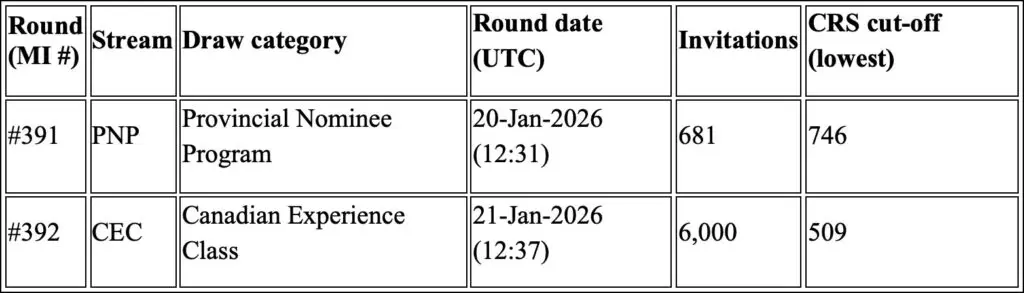
(Source)
For comprehensive legal analysis or strategic case support, contact Greenberg Hameed PC.
The content of this bulletin is for informational purposes only, and is not intended to provide or be relied on as legal advice.
in**@*************ed.com
Click on the blurred section to reveal the full email address.
Suite 2079 – 325 Front Street West, Toronto, ON, M5V 2Y1
Business hours
Monday to Friday: 9 a.m. to 5 p.m.
Saturdays:
Sundays: Closed
View our full Privacy Policy.