

Explore the latest ImmPulse Weekly for key Canadian immigration insights—or browse past editions to catch up.
Neil Cochrane, a former immigration officer and manager, reflects on how Canada’s immigration processing shifted from personal, face-to-face interactions to mail-based and now portal-driven “box-checking,” arguing that depersonalization risks undermining fair, nuanced decision-making in cases with life-altering consequences. His 2025 memoir Beyond Numbers: Stories from an Immigration Insider recounts on-the-ground stories—from advising students and assisting refugees to difficult interviews involving suspected marriages of convenience—highlighting both the human stakes for applicants and the complexity of officers’ work. Cochrane also warns that, as immigration levels and public sentiment shift, the system can hit a “tipping point” where dialogue becomes harder and resentment may be misdirected at immigrants rather than policy choices.
Effective January 1, 2026, Ontario’s new ESA regulation (O. Reg. 476/24) introduces job-posting rules for employers with 25 or more employees who publicly advertise positions—relevant for immigration practitioners and HR professionals advertising roles for Labour Market Impact Assessment and Ontario Immigrant Nominee Program compliance. Key requirements:
(Source)
For 2026, IRCC has authority to accept up to 10,000 Parents and Grandparents (PGP) applications received under the 2025 intake into processing during 2026. As of January 1, 2026, no new parent/grandparent permanent resident visa applications (and related sponsorship applications) will be received for processing until further instructions are issued; IRCC notes this is for administrative purposes, with details on the next intake to follow.
(Source)
IRCC updated its medical inadmissibility guidance to reflect the 2026 excessive demand cost threshold for health and social services ($144,390 over 5 years or $28,878 per year). Stakeholders should rely on the updated instructions for the current 2026 threshold and how it is applied in decision-making.
(Source)
New regulations (SOR/2025-278) support Bill C-3’s expanded citizenship-by-descent framework by (1) extending a simplified renunciation pathway for certain individuals who automatically become citizens under the 2025 amendments but do not wish to retain citizenship, and (2) prescribing updated evidence requirements for direct grants to adopted persons born abroad, including proof of a Canadian parent’s physical presence in Canada for at least 1,095 days in specified scenarios.
(Source)
Companion amendments (SOR/2025-276) update section 7.1 of the Citizenship Regulations to expressly capture applications made under the new simplified renunciation provisions, align English/French wording, and confirm that minors can apply under the simplified renunciation scheme (with the amendments coming into force alongside the related “No. 2” regulations).
(Source)
This extended public policy facilitates fee-exempt extensions/TRPs for Sudanese nationals in Canada with valid temporary resident status who apply to extend status (R181) or seek a TRP, including biometrics fee exemptions. It also supports movement between streams by enabling certain in-Canada work permit and study permit applications with related exemptions, and provides a limited passport/travel document waiver for Sudanese nationals outside Canada who are otherwise ready to be approved for a PR visa but cannot obtain prescribed documents due to hostilities. The policy is dated December 29, 2025, replaces the October 27, 2025 version, and expires October 27, 2026.
(Source)
This updated policy continues special measures for certain family members of Canadian citizens/permanent residents who fled Sudan: it applies to those who left Sudan on/after April 15, 2023, entered Canada before July 15, 2023, and hold valid temporary resident status. It maintains access to fee waivers for status extensions/TRPs (including biometrics), supports in-Canada work permit and study permit access through exemptions (to help settlement and self-support), and includes fee exemptions tied to family-class / in-Canada spouse or common-law partner permanent residence applications for eligible individuals. The policy is dated December 29, 2025, replaces the October 27, 2025 version, and expires October 27, 2026.
(Source)
Issue:
Whether refusal of a TFWP work permit (cook) was reasonable and procedurally fair, given concerns about job ability and language.
Facts:
Applicant (Lebanon) applied for a cook work permit supported by an LMIA requiring secondary education and English/French ability. Officer documented concerns after a verification call (limited English; difficulty explaining basic kitchen/cooking knowledge). A PFL requested proof of education/language. Applicant responded with translated education documents, expired IELTS, and an Instagram link; the officer also attempted employer verification and found at least one claimed employer denied employing him. Officer attempted further contact for another interview but could not reach him and refused.
Court Findings:
Outcome:
Judicial review dismissed; no certified question.
Why This Case is Important:
Shows that even with an LMIA, officers can refuse if the applicant does not credibly demonstrate ability to do the job (including language tied to safe performance), and that detailed GCMS notes can sustain reasonableness review.
Issue:
Whether Mr. Papouchine should be declared a vexatious litigant under s. 40 of the Federal Courts Act and required to obtain leave before filing/continuing matters.
Facts:
CICC moved (with AGC consent) for a vexatious litigant order, relying on a long history of proceedings and prior vexatious findings in other forums. The underlying JR challenged aspects of RCIC licensing and alleged disability discrimination/lack of accommodation.
Court Findings:
Outcome:
Declared vexatious litigant; proceedings stayed and future filings restricted unless leave is granted (with additional limits to prevent proxy litigation). No costs awarded.
Why This Case is Important:
A clear example of how s. 40 is used to protect Federal Court resources by regulating (not wholly barring) access, and how prior vexatious findings elsewhere can support Federal Court filing restrictions.
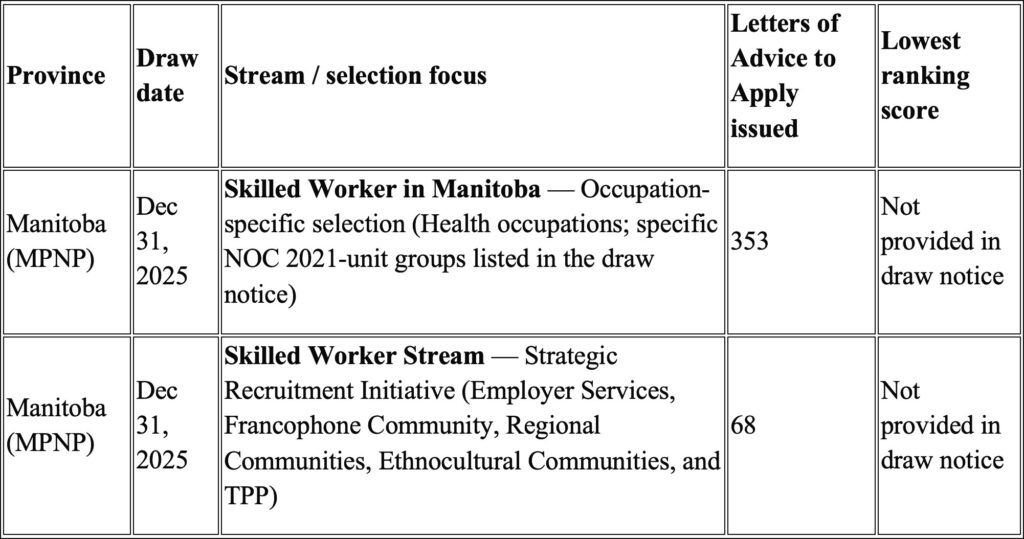
(Source)
For comprehensive legal analysis or strategic case support, contact Greenberg Hameed PC.
The content of this bulletin is for informational purposes only, and is not intended to provide or be relied on as legal advice.
in**@*************ed.com
Click on the blurred section to reveal the full email address.
Suite 2079 – 325 Front Street West, Toronto, ON, M5V 2Y1
Business hours
Monday to Friday: 9 a.m. to 5 p.m.
Saturdays:
Sundays: Closed
View our full Privacy Policy.