

Explore the latest ImmPulse Weekly for key Canadian immigration insights—or browse past editions to catch up.
A recent Nanos Research poll conducted for Bloomberg News reveals that 52% of Canadians believe the country should accept fewer immigrants and temporary residents in 2027. This sentiment persists despite a significant slowdown in population growth—which may have even shrunk last year for the first time on record—following the federal government’s decision to tighten rules for work and study visas and lower permanent residency targets. Concerns regarding the economy, the cost of living, and strains on housing and social services continue to drive this push for lower levels. Nationally, citizens are nearly six times more likely to favor a reduction in newcomers than an increase, with the strongest desire for lower numbers appearing in Alberta, Saskatchewan, and Manitoba.
The 2026 Ontario Immigrant Nominee Program (OINP) updates detail a series of strategic invitations and regulatory shifts designed to address provincial labor needs and enhance program integrity. Throughout early 2026, Ontario issued numerous invitations across various streams, specifically targeting physicians, healthcare workers, early childhood educators, and skilled trades-related occupations, while also inviting hundreds of candidates through the Masters and PhD Graduate streams. A key development includes the “Working for Workers Seven Act, 2025,” which grants the Minister new authority to redesign the OINP by creating or removing selection streams and strengthens enforcement through updated administrative monetary penalties for misrepresentation. Additionally, the province announced a 2026 nomination allocation of 14,119 and implemented eligibility changes for self-employed physicians, requiring a provisional certificate of registration and an OHIP billing number to qualify.
In a landmark enforcement of Saskatchewan’s Immigration Services Act (ISA), the Ministry of Immigration and Career Training issued a $96,000 compensation order against Yan Wang, an unlicensed consultant. An investigation revealed that Wang collected payments for immigration services but failed to submit any documentation to the Saskatchewan Immigrant Nominee Program, instead providing the victim with falsified records. This case marks the first paid compensation order under the ISA, resulting in the full recovery of funds for the victim who suffered financial losses due to Wang’s fraudulent activities. Under the Act, the Ministry maintains the authority to investigate complaints and penalize consultants who operate without a license or exploit clients through negligence and fraud.
Starting March 31, 2026, Immigration, Refugees and Citizenship Canada (IRCC) is updating the family income calculation for super visa eligibility to make the program more accessible. The super visa allows parents and grandparents of Canadian citizens or permanent residents to visit for extended periods, provided their host meets specific financial support requirements. The new criteria offer two alternative ways to meet these income goals:
All applications currently in processing or submitted on or after March 31, 2026, will be evaluated under these updated rules. Families who were eligible under the old criteria will remain eligible, but those wishing to use the new alternatives must submit documentation proving they meet the requirements for their family size.
Section A11.2 of the Immigration and Refugee Protection Act (IRPA) mandates that an Express Entry application must be refused if the applicant fails to meet the program’s minimum entry criteria or no longer possesses the qualifications that earned them their Invitation to Apply (ITA). When an electronic application for permanent residence (eAPR) is submitted, processing officers verify that the applicant’s Comprehensive Ranking System (CRS) score remains at or above the minimum cutoff for their specific round of invitations. While certain exemptions exist for age changes or specific medical professions, any significant discrepancy between the initial profile and the final application that results in a lower score or failure to meet program requirements will lead to a refusal. This assessment also includes a strict review of educational credentials and trade certificates to ensure they were issued by recognized, competent authorities.
Business visitors are individuals who enter Canada to facilitate international trade and commerce but do not directly enter the Canadian labour market. Under the Immigration and Refugee Protection Regulations, these visitors are authorized to work without a permit because their primary source of remuneration and principal place of business remain outside of Canada. Common business activities include purchasing Canadian goods or services, attending training sessions within a parent or subsidiary corporation, or representing a foreign entity to sell goods to non-general public clients.
To qualify for a business visitor visa, applicants must provide documented proof of their intent, such as a letter of invitation or a letter of financial support from their foreign employer. It is important to note that any work experience gained while in Canada as a business visitor cannot be used to meet the requirements for the Canadian Experience Class (CEC). While officers may limit the duration and entries of a visa based on individual circumstances, frequent travelers with a history of compliance may be eligible for longer-term, multiple-entry visas.
On International Day of La Francophonie, Canada announced a $1.5 million investment into three new projects aimed at increasing Francophone immigration and supporting economic development in minority communities outside Quebec. These initiatives focus on attracting French-speaking talent to Northern Ontario, strengthening the Francophone presence in the information and communications technology sector, and providing resources to help candidates navigate employment and settlement opportunities. This investment aligns with the government’s broader strategy to use bilingual immigration to meet labor needs and ensure the long-term vitality of Francophone and Acadian communities across the country.
Immigration, Refugees and Citizenship Canada (IRCC) has introduced a new temporary public policy to help Quebec transition more temporary residents into permanent residents. Under this time-limited initiative, select temporary foreign workers can access employer-specific work permits through the International Mobility Program (IMP). These instructions, effective March 19, 2026, also include updated Labour Market Impact Assessment (LMIA) exemption codes to facilitate the permit process.
Issue: Whether the denial of a restoration of work permit application was unreasonable due to the alleged incompetence of the applicant’s former immigration representative.
Facts: Mr. Singh, a citizen of India, held an open work permit that expired on October 25, 2024. He applied for restoration of his status, but the application was refused. He challenged this refusal, arguing that his former representative’s incompetence led to the denial.
Court Findings: The Court was not satisfied that the outcome of the restoration application would have been different even if the representative had acted differently. Additionally, the Court found that the potential requirement for Mr. Singh to leave Canada to reapply for a permit did not constitute sufficient prejudice to support a claim of incompetence.
Outcome: Judicial review dismissed.
Why This Case is Important: This case clarifies the high threshold for claiming representative incompetence in immigration matters. It establishes that an applicant must prove the representative’s conduct actually impacted the final decision and that standard immigration inconveniences, such as leaving Canada to reapply, do not necessarily meet the legal definition of “prejudice”.
Issue: Whether the finding of misrepresentation and the subsequent refusal of a visitor visa and reconsideration request were reasonable and procedurally fair.
Facts: Ms. Gabayan, a citizen of the Philippines, applied for a visitor visa with the assistance of an unlicensed consultant. Her application was referred to a Risk Assessment Unit (RAU), which found her “purpose of travel” letter was nearly identical to letters in other unrelated applications. She was found inadmissible for five years for misrepresentation regarding her travel purpose and employment background.
Court Findings: The Court determined the decision-making process was flawed, particularly regarding the RAU’s assessment of material facts and the handling of the procedural fairness letter.
Outcome: Judicial review allowed. The matter was remitted for redetermination by a different officer, and the applicant was awarded $1,500 in costs.
Why This Case is Important: It highlights that findings of misrepresentation must be based on a reasonable assessment of “materiality” and that the Court will intervene if procedural fairness is not maintained during the Risk Assessment Unit’s investigation.
Issue: Whether a Migration Officer reasonably found the applicant inadmissible under paragraph 35(1)(a) of the IRPA for making a “knowing contribution” to crimes against humanity.
Facts: Mr. Kesete, a 31-year-old Eritrean citizen, was forcibly conscripted into the military at age 16 and served for approximately 7.5 years. The Officer determined he contributed to the army’s systematic use of torture while he was stationed in Assab.
Court Findings: The Court upheld the finding that the applicant could not rely on a defense of duress because he denied participating in torture while simultaneously admitting he had witnessed it throughout his long period of service.
Outcome: Judicial review dismissed.
Why This Case is Important: It reinforces the “significant knowing contribution” threshold for inadmissibility related to crimes against humanity, demonstrating that long-term service and witnessing atrocities can lead to inadmissibility even in contexts of forced conscription.
Issue: An appeal of an interlocutory order by an Associate Judge regarding the production of documents in the ongoing challenge to the Safe Third Country Agreement (STCA).
Facts: Several organizations, including the Canadian Council for Refugees and Amnesty International, are challenging the validity of the STCA. This specific motion appealed a lower court order concerning the scope of evidence and the Certified Tribunal Record.
Court Findings: The Court reviewed whether the Motion Judge made a “palpable and overriding error” in their discretionary ruling regarding procedural aspects of the judicial review.
Outcome: Order and reasons provided regarding the interlocutory appeal.
Why This Case is Important: This case provides a significant procedural update on one of Canada’s most high-profile constitutional challenges regarding refugee eligibility and the management of the Canada-US border.
Issue: Whether the Immigration Appeal Division (IAD) reasonably dismissed an appeal of a refused spousal sponsorship application based on a prior misrepresentation.
Facts: Mr. Rusakov, a Canadian citizen, sought to sponsor his spouse, Mr. Ivanov. Mr. Ivanov had previously been found inadmissible for five years after failing to disclose a prior US visa refusal in a visitor visa application. The IAD upheld the refusal of the sponsorship.
Court Findings: The Court held that the IAD’s decision was reasonable and properly applied existing jurisprudence regarding the consequences of misrepresentation.
Outcome: Judicial review dismissed.
Why This Case is Important: It confirms that the five-year ban for misrepresentation is a substantial barrier that typically persists even when the individual is being sponsored by a Canadian citizen spouse.
Issue: Whether an officer reasonably refused permanent residence applications under the Start-Up Business Class (SUBC).
Facts: Four Iranian applicants sought permanent residence through a venture called “Enduroplus Cleanlabs Inc.”. The Officer found that the “essential member,” Mr. Rezaie, did not prove that an essential part of the business would be conducted in Canada or that he intended to manage it from within the country.
Court Findings: The Court found the decision reasonable, noting that the applicants failed to demonstrate a genuine intent to actively manage the business while physically present in Canada.
Outcome: Judicial review dismissed.
Why This Case is Important: It emphasizes that the SUBC requires more than just a commitment from a designated organization; applicants must provide concrete evidence that the business will be essentially and actively operated from within Canada.
Issue: Whether an officer’s refusal of a permit application was unreasonable for failing to consider section 221 of the IRPR.
Facts: Ms. Verma, a citizen of India, entered Canada with a study permit but encountered status issues after relocating from Ontario to Alberta. She challenged a subsequent refusal on the grounds that the officer ignored specific regulatory provisions.
Court Findings: The Court found that because the Applicant did not raise the application of section 221 in her original submissions to the Officer, the Officer did not err by failing to consider it.
Outcome: Judicial review dismissed.
Why This Case is Important: It reinforces the principle that the burden is on the applicant to raise specific legal arguments or regulatory provisions during the application process; decision-makers are not required to search for every possible legal remedy not explicitly argued by the parties.
Issue: Whether the restoration process can be used to obtain a different temporary resident status than the one previously held.
Facts: Mr. Kohli’s application to restore his status as a worker was refused because the Officer interpreted the law as only allowing restoration to the same status (student) he held immediately before it expired.
Court Findings: The Court found the Officer’s interpretation of subsection 182(1) of the IRPR to be reasonable and consistent with the intended purpose of the restoration provision.
Outcome: Judicial review dismissed.
Why This Case is Important: This case addresses a common point of contention in restoration applications, clarifying that “restoration” is generally intended to return an applicant to the specific status they recently lost, rather than serving as a bridge to a new category of authorization.
Issue: Whether the refusal of a study permit based on “insufficient funds” was reasonable given the evidence of financial resources provided.
Facts: A Nigerian applicant provided proof of fully paid tuition ($19,201) and a CIBC GIC account containing $20,635. Despite this, the Officer refused the permit, citing a lack of sufficient funds.
Court Findings: The Court found the decision unreasonable because the Officer failed to logically account for the substantial liquid funds and pre-paid expenses documented in the application.
Outcome: Judicial review allowed; the matter is remitted for redetermination by a different officer.
Why This Case is Important: It serves as a check on “insufficient funds” refusals, emphasizing that officers must provide a rational explanation when they reject an application that appears to meet or exceed established financial thresholds like the GIC requirement.
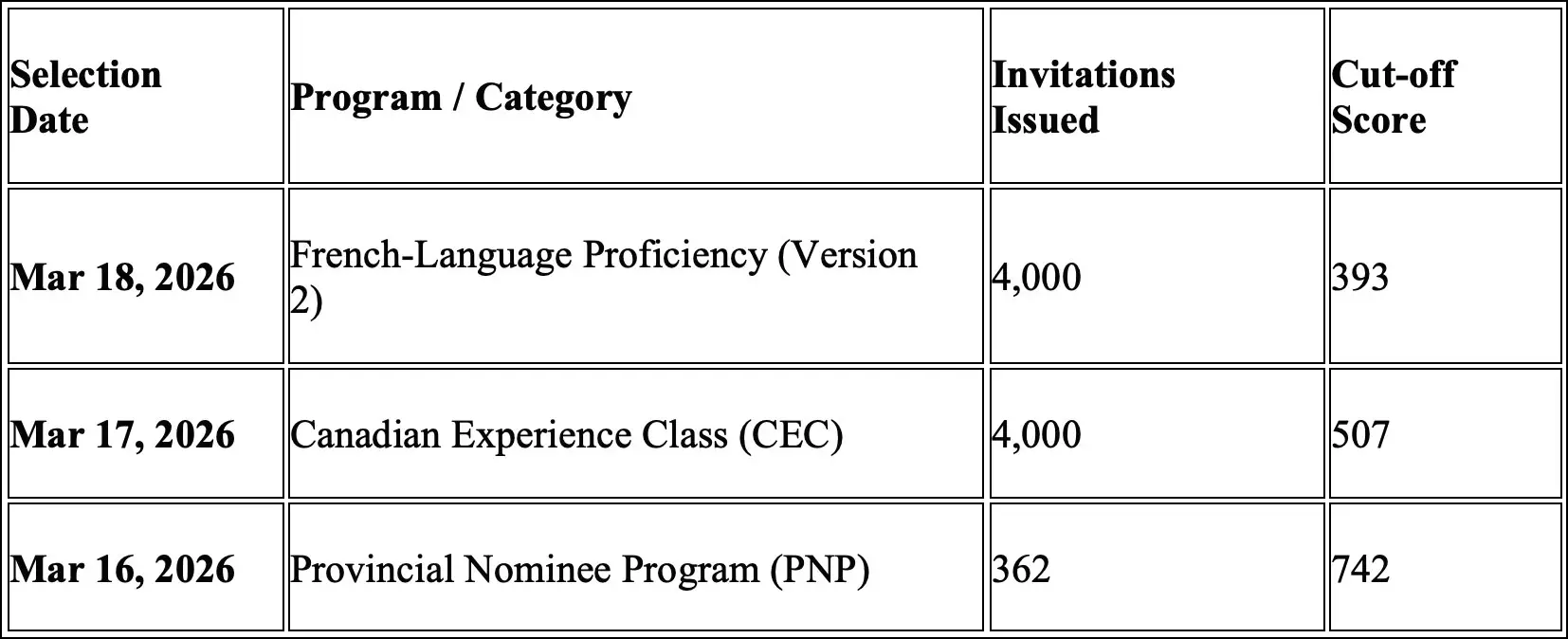
Express Entry
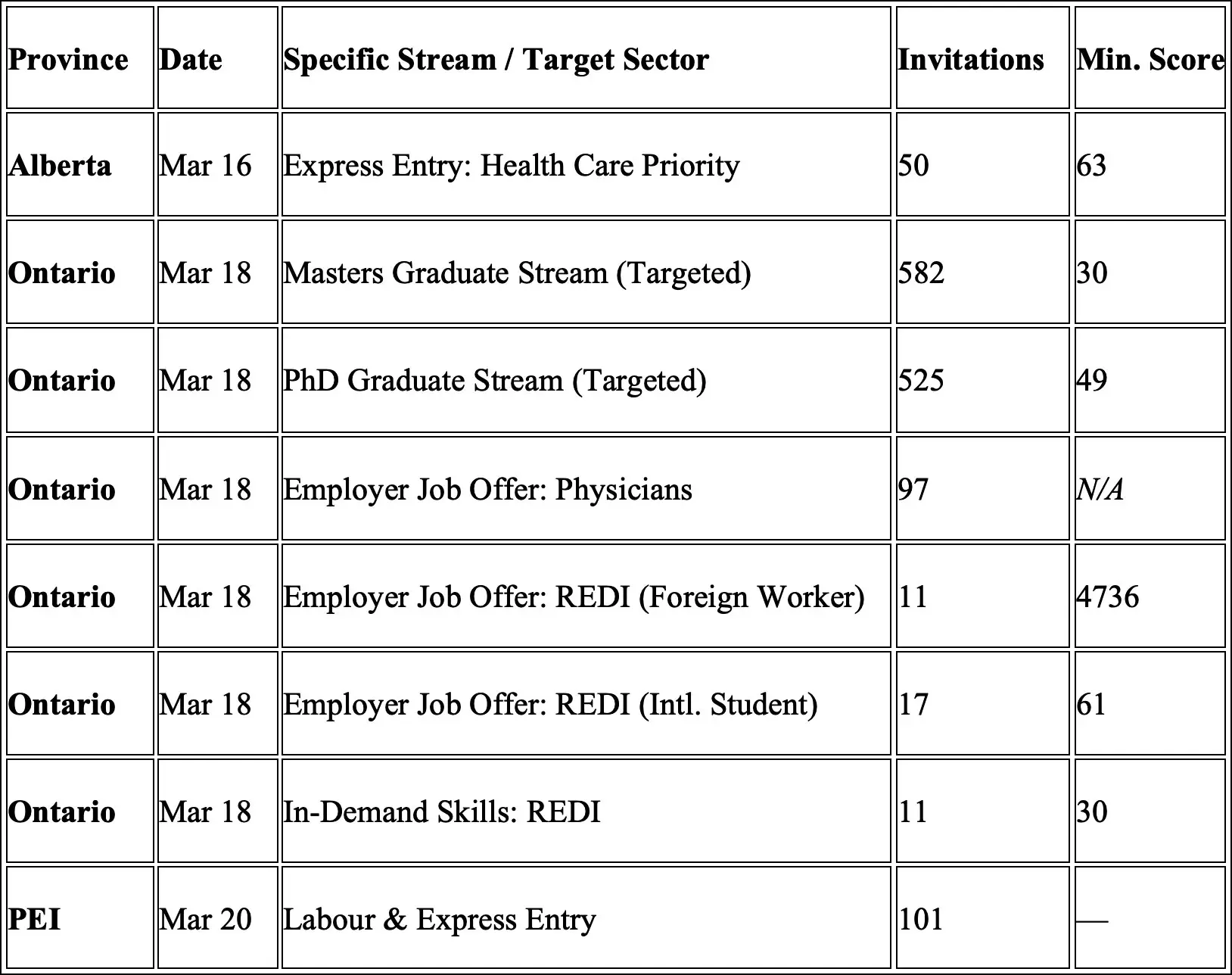
Provincial Nominee Program (PNP)
The content of this bulletin is for informational purposes only, and is not intended to provide or be relied on as legal advice.
For comprehensive legal analysis or strategic case support, contact Greenberg Hameed PC.
in**@*************ed.com
Click on the blurred section to reveal the full email address.
Suite 2079 – 325 Front Street West, Toronto, ON, M5V 2Y1
Business hours
Monday to Friday: 9 a.m. to 5 p.m.
Saturdays:
Sundays: Closed
View our full Privacy Policy.