

Explore the latest ImmPulse Weekly for key Canadian immigration insights—or browse past editions to catch up.
Following the passage of Bill C-12 (the Strengthening Canada’s Immigration System and Borders Act), which received Royal Assent on March 26, 2026, the federal government has begun the retroactive termination of approximately 29,000 refugee claims filed since the bill was first introduced in June 2025.
This sweeping legislation establishes a strict one-year deadline for asylum seekers who first entered Canada after June 24, 2020, and mandates a 14-day filing window for those crossing irregularly from the U.S. border, effectively closing the “loophole” for claimants who wait months or years to file while already in the country.
While the government argues these measures are necessary to reduce the massive IRB backlog and deter “shortcut” immigration, legal advocates and the Canadian Council for Refugees have condemned the move as a violation of constitutional due process, warning that thousands of vulnerable individuals, including those fleeing gender-based violence or LGBTQIA+ persecution, will now be funneled into the limited Pre-Removal Risk Assessment (PRRA) process without ever receiving a merit-based hearing.
On March 26, 2026, Bill C-12, the Strengthening Canada’s Immigration System and Borders Act, officially became law, introducing significant reforms across four primary areas to enhance system efficiency and security. Key changes include:
These measures aim to close loopholes and reduce pressure on the asylum system while maintaining protections like the Pre-Removal Risk Assessment (PRRA) for those affected by the new eligibility rules.
In a statement released March 23, 2026, Minister Lena Metlege Diab responded to the Auditor General of Canada’s audit of the International Student Program, acknowledging progress while committing to further system improvements. The Minister highlighted that recent reforms, including a new letter of acceptance verification system and a reduction in student numbers, have begun to strengthen program integrity and diversify the student population. Recent data shows these measures are taking effect, with the non-permanent resident population falling by over 171,000 in late 2025 as the government works toward a target of below 5% of the total population by late 2027. While accepting recommendations to better track suspected fraud, the Minister noted that the audit only captures the initial 18 months of a multi-year reform and emphasized that final student volumes are also heavily influenced by provincial institutional oversight and broader economic factors like housing affordability.
In recognition of Fraud Prevention Month, the Government of Saskatchewan highlighted its commitment to maintaining the integrity of the provincial immigration system through the enforcement of The Immigration Services Act (ISA). Since the Act was proclaimed in 2024, the province has strengthened compliance efforts, resulting in four individuals being charged—the first of their kind under provincial legislation in Canada—and the issuance of five administrative monetary penalties totaling $27,000 for unauthorized recruitment services. Additionally, the province has issued four compensation orders and successfully collected $96,000 in one instance to protect vulnerable newcomers and law-abiding employers. The Ministry of Immigration and Career Training’s Program Compliance Branch encourages anyone with concerns or complaints to contact them confidentially to ensure all workers, including foreign nationals and Canadian citizens, remain protected under provincial employment standards.
Effective March 24, 2026, the Canada Border Services Agency (CBSA) has implemented an Administrative Deferral of Removals (ADR) for the United Arab Emirates, Kuwait, Bahrain, and Qatar due to volatile conditions posing generalized risks to their civilian populations. This temporary measure, authorized under the Immigration and Refugee Protection Regulations, pauses removals to countries deemed unsafe due to violence or environmental disasters. However, the ADR does not apply to individuals inadmissible on grounds of security, organized crime, or human rights violations. While the CBSA maintains a legal obligation to remove inadmissible persons—having completed over 22,500 removals in 2025—these specific deferrals will remain in place until the situation in these four countries stabilizes. There are currently 20 such ADRs active worldwide.
On March 26, 2026, the Immigration and Refugee Protection Act was amended to introduce new grounds for finding refugee claims ineligible for referral to the Immigration and Refugee Board (IRB). This program delivery update, published by Immigration, Refugees and Citizenship Canada (IRCC) on March 27, 2026, provides updated policy and procedures for staff regarding these new ineligibility criteria. In addition to the new grounds, the update includes revisions to section A101(1)(c.1) and general improvements to instructions regarding eligibility for referral to the IRB.
On March 23, 2026, Immigration, Refugees and Citizenship Canada (IRCC) announced that the Innovation Stream pilot under the International Mobility Program (IMP) has been extended until March 22, 2028. This pilot allows high-skilled workers to be recruited through the Global Hypergrowth Project (GHP) to enter Canada using an LMIA-exempt, employer-specific work permit. The updated instructions provide guidance for IRCC staff regarding the issuance of these permits under exemption code C88.
On March 23, 2026, Immigration, Refugees and Citizenship Canada (IRCC) updated its operational instructions to clarify which processing guides apply to applications within the Self-Employed Persons Class. The update specifies that:
This administrative addition to the external Operations Bulletin is intended to assist staff and stakeholders in identifying the correct procedural guidance based on the application’s submission date.
As of March 23, 2026, the Overseas Processing Manual 3: Adoptions (OP3) has been modernized and fully integrated into the Program Delivery Instructions (PDIs). These updated instructions for processing permanent residence applications for intercountry adoptions now include new or amended guidance on several critical areas:
The update also introduces new instructional sections covering the general application process and the Hague Convention, while renaming and updating existing best practices and concepts.
Effective March 23, 2026, the Government of Canada has expanded open work permit eligibility for spouses of foreign nationals working under Significant Investment Project (SIP) provisions. Under this update, spouses of SIP workers in British Columbia—currently limited to those employed by Lululemon Athletica Inc. and Microsoft Vancouver—can apply for an open work permit regardless of the primary worker’s occupation or Training, Education, Experience and Responsibilities (TEER) level. Spouses of high-skilled workers (TEER 0–3) fall under administrative code C41, while those of low-skilled workers (TEER 4–5) are now eligible under code C47. This policy applies to all applications received on or after the announcement date, marking a significant shift from previous rules that restricted eligibility primarily to spouses of high-skilled workers in specific TEER categories.
To alleviate strain on the asylum system and reduce reliance on provincial services, the Government of Canada has introduced a transitional public policy facilitating open work permits for certain foreign nationals whose refugee claims are deemed ineligible for referral to the Immigration and Refugee Board (IRB). Under previous rules, individuals with ineligible claims had to wait until their removal order was stayed—typically upon notification that they could apply for a Pre-Removal Risk Assessment (PRRA)—before applying for a work permit, leading to significant employment gaps. This new policy allows eligible claimants to apply for or maintain their work permits immediately after their claim is found ineligible, even before the PRRA process begins or their removal order is stayed. It specifically addresses two newly introduced ineligibility categories: the “one-year” rule for claims made more than a year after entry, and the “14-day” rule for irregular entries from the U.S. Effective upon the Royal Assent of Bill C-12, this policy ensures that vulnerable individuals can support themselves financially while awaiting further risk assessments.
To maintain service reliability and account for inflation, Immigration, Refugees and Citizenship Canada (IRCC) will increase permanent residence fees starting April 30, 2026. Under the Immigration and Refugee Protection Regulations, these fees are adjusted every two years to manage program costs and rising demand. Key fee changes for principal applicants include:
Any application received on or after April 30, 2026, will be subject to these new rates.
Starting March 31, 2026, the right of citizenship fee for adult applicants will increase to help cover rising costs and maintain the citizenship program. In accordance with the Service Fees Act, which requires annual inflationary adjustments for certain government fees, the cost will rise by $3.25, moving from $119.75 to $123. While this specific fee is changing, the adult citizenship grant application processing fee remains at $530. Any applications received on or after the March 31 deadline will be required to pay the new rate.
Issue: Whether the doctrine of functus officio (finality of a decision) prevented the Court from considering a second motion for an extension of time to perfect a judicial review application after a prior motion for the same relief had been denied.
Facts: The applicants missed their deadline to perfect an application for leave and judicial review due to the incompetence of their former counsel. A first motion for an extension was dismissed because former counsel filed inadequate materials. A second motion was filed by new counsel, which the Associate Judge refused to hear, claiming the Court was functus officio.
Court Findings: Justice McHaffie found that the Associate Judge erred in law. Functus officio prevents a court from reopening or amending a final decision but does not deprive it of jurisdiction to hear a new motion for the same relief if the original order is not altered. While the doctrine of issue estoppel applies to prevent re-litigating the same question, the Court has the discretion not to apply it if doing so would cause an injustice.
Outcome: The appeal was allowed. The Court exercised its discretion not to apply issue estoppel due to the clear incompetence of previous counsel and granted the extension of time to perfect the application.
Why This Case is Important: It clarifies that functus officio does not automatically bar a second motion for the same relief. It also reinforces that “effective assistance of counsel” is a principle of natural justice in immigration proceedings that can justify a court’s discretion to hear a second motion to prevent a miscarriage of justice.
Issue: Whether the Court should grant leave to file supplementary reply evidence, expedite a leave application, or grant a mandamus order for a permanent residency decision while the leave stage is still pending.
Facts: Mr. Chen, a Chinese citizen, applied for permanent residence in 2022. After a security review was initiated, he sought an order of mandamus to compel a decision. While waiting for the Court’s decision on leave, he filed this motion to add new evidence regarding his security screening and to speed up the Court’s process.
Court Findings: The Court found no “special circumstances” to allow new evidence, noting that the applicant was effectively “case splitting” by adding information after the Minister had already responded. On the request to expedite, the Court ruled that Rule 8(1) cannot be used to compel the Court to issue an order at a specific time, as the timeline for rendering a decision is the Court’s exclusive prerogative.
Outcome: The motion was dismissed in its entirety.
Why This Case is Important: It affirms that the Court’s internal timeline for deciding leave is within its own jurisdiction and cannot be “expedited” by a party using the Federal Courts Rules. It also highlights that mandamus relief cannot be granted before the Court has even disposed of the underlying application for leave.
Issue: Whether a Visa Officer’s refusal of Temporary Resident Visas (TRVs) was reasonable when based on the claim that the applicants lacked significant ties outside of Canada.
Facts: A plastic surgeon and his minor daughter from Iran applied for TRVs to visit family in Canada. They had a strong history of compliance, having visited Canada and returned to Iran three times previously. The officer refused the visas, using boilerplate language to state they had significant family ties in Canada but none outside of Canada.
Court Findings: The Court found the decision unreasonable. The officer failed to explain why the applicants’ parents and siblings in Tehran were not “significant” while a sister in Toronto was. Furthermore, the officer ignored significant “pull” factors, including the father’s high-level medical practice and ownership in several hospitals in Iran.
Outcome: Judicial review granted; the matter was remitted for redetermination by a different officer.
Why This Case is Important: It emphasizes that even though visa decisions are discretionary and reasons can be brief, officers must still engage with specific evidence that contradicts their findings. Merely using “boilerplate” language without justifying why local ties are insufficient constitutes a failure of the “culture of justification”.
Issue: Whether the refusal of a permanent resident application based on Humanitarian and Compassionate (H&C) grounds was reasonable for a 73-year-old applicant.
Facts: Ms. Kaur, a widowed citizen of India, sought an exemption to stay in Canada with her son’s family. She argued that Indian tradition prevented her from living with her daughter in India and that her mental health would suffer if she returned to India alone.
Court Findings: The Court held the officer’s decision was reasonable. The officer correctly noted a lack of objective evidence regarding the hardship widows face in India. Additionally, because the applicant had lived independently in India for years before coming to Canada, the officer’s finding that she could continue to do so was supported by the record.
Outcome: The application for judicial review was dismissed.
Why This Case is Important: This case highlights that H&C relief is “exceptional” and requires specific, objective evidence of hardship. Emotional distress caused by the “inevitable consequences” of immigration (separation from family) is generally insufficient on its own to warrant an H&C exemption.
Issue: Whether the H&C refusal was unreasonable due to the officer’s failure to properly weigh the Best Interests of the Child (BIOC) and the Administrative Deferral of Removal (ADR).
Facts: Applicants from Syria/Venezuela applied for H&C relief. They argued they would face hardship due to ongoing crises in their home countries (subject to an ADR) and that the daughter’s education would be negatively impacted by her lack of status.
Court Findings: The Decision was unreasonable because while the officer assigned weight to every other factor, they failed to state what weight was given to the BIOC. Furthermore, the officer did not meaningfully engage with the fact that an ADR was in place, which is a relevant consideration for country conditions and hardship.
Outcome: Judicial review granted.
Why This Case is Important: It reinforces that the BIOC is a “significant or primary factor” in H&C analyses; a decision-maker must clearly communicate the weight accorded to it for the decision to be transparent and intelligible.
Issue: Whether the H&C refusal was unreasonable for failing to conduct a sensitive BIOC analysis regarding a 15-year-old’s mental health.
Facts: A Nigerian minor came to Canada to study. After her aunt withdrew sponsorship, she suffered a psychotic episode. She applied for H&C status, claiming her parents in Nigeria had bipolar disorder and could not care for her.
Court Findings: The Court found the decision reasonable. The applicant provided a one-page report of a single past episode but no evidence of a chronic condition or proof that her parents were actually incapacitated by mental illness. The officer’s finding of insufficient evidence was justified by the record.
Outcome: Application for judicial review dismissed.
Why This Case is Important: It demonstrates that while officers must be “alert, alive and sensitive” to the BIOC, they are not required to accept speculative claims of future hardship or mental health deterioration without a reliable evidentiary foundation.
Issue: Whether the Immigration Appeal Division (IAD) has jurisdiction to hear an appeal of a sponsorship refusal when the sponsored person is barred for misrepresentation under s. 40(3).
Facts: Mr. Rusakov’s spouse was found inadmissible for misrepresentation (failing to disclose a prior US visa refusal), triggering a 5-year bar on applying for PR. When their PR application (with an H&C request) was refused, they appealed to the IAD. The IAD dismissed the appeal for lack of jurisdiction.
Court Findings: The Court held the IAD’s interpretation was reasonable. Section 40(3) of the Act explicitly states that a person inadmissible for misrepresentation “may not apply” for PR during the 5-year bar. Allowing an appeal would subvert the intention of Parliament to impose strict consequences for misrepresentation.
Outcome: Application for judicial review dismissed.
Why This Case is Important: It confirms that the 5-year bar for misrepresentation cannot be “side-stepped” by adding an H&C application to a PR request; if the application was barred by statute from being made, the IAD has no jurisdiction to hear an appeal of its refusal.
Issue: Whether the refusal of a TRV was unreasonable based on family ties in Canada versus ties in the home country.
Facts: An Iranian citizen applied for a TRV to visit his spouse and children in Vancouver. The officer refused, citing significant ties in Canada and a lack of significant ties outside Canada.
Court Findings: The Court found the decision reasonable. Although the applicant had parents and siblings in Iran, the presence of his immediate family (spouse and children) in Canada was a powerful “pull” factor. It was open to the officer to conclude that these immediate ties made it less likely he would leave Canada at the end of his stay.
Outcome: Application for judicial review dismissed.
Why This Case is Important: It clarifies that having some family in the home country does not automatically outweigh immediate family ties in Canada; visa officers are entitled to prioritize the “pull” of a spouse and children in their risk assessment.
Express Entry
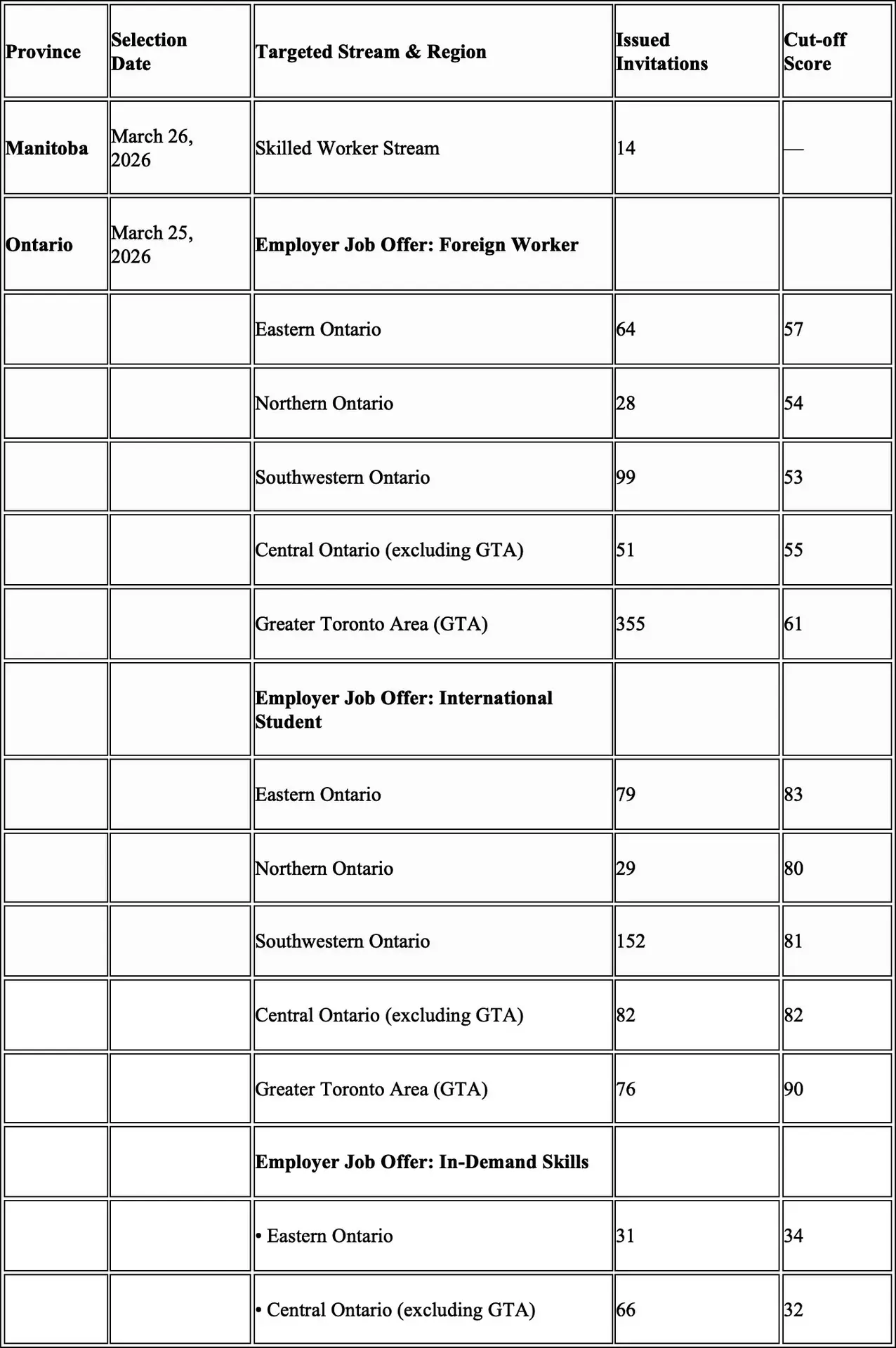
Provincial Nominee Program
The content of this bulletin is for informational purposes only, and is not intended to provide or be relied on as legal advice.
For comprehensive legal analysis or strategic case support, contact Greenberg Hameed PC.
in**@*************ed.com
Click on the blurred section to reveal the full email address.
Suite 2079 – 325 Front Street West, Toronto, ON, M5V 2Y1
Business hours
Monday to Friday: 9 a.m. to 5 p.m.
Saturdays:
Sundays: Closed
View our full Privacy Policy.